Ask a Logan Circle condo buyer what protects them from an underfunded reserve fund, and most will say the same thing: there must be a law for that. D.C. has rules for almost everything else in a real estate transaction, from lead paint disclosures to the resale package a seller has to hand over before closing. Surely reserve funding is covered too.
It isn't. Read the D.C. Condominium Act and you won't find a fixed schedule for reserve studies or a minimum percentage a building has to keep funded. The statute requires disclosure. It does not require adequacy. That gap matters more in Logan Circle than in most D.C. neighborhoods, because the housing stock here splits into two genuinely different risk categories, and the number actually forcing boards to fund their reserves properly isn't coming from the D.C. Council. It's coming from Fannie Mae and Freddie Mac, and the rule is about to get stricter.
What the Statute Actually Says
The D.C. Condominium Act gives associations the power to "adopt and amend a budget for revenues, expenditures, and reserves" and to collect assessments to cover them. That's an authorization, not an obligation. The only place reserves show up as a required disclosure is in the declarant's public offering statement, which has to state the dollar amount budgeted for repair and replacement reserves, or say plainly that no amount is reserved. You can read the full chapter yourself. There's no clause requiring a reserve study every three years, no minimum funding percentage, no penalty for a board that lets the account run thin.
You'll find guides online that describe D.C. as mandating reserve studies on a fixed cycle. That description doesn't match the statute. What D.C. law does require, once you're buying resale rather than new construction, is a full package from the seller before closing: the declaration and bylaws, the current operating budget, recent financials, the reserve balance, insurance information, a certificate of unpaid assessments, and disclosure of any pending litigation. You get a cancellation window tied to when you actually receive that package, so the paperwork matters less as a formality and more as your real chance to see whether the building is financially sound before you're locked in.
None of that tells a board how much it should have saved. It just tells a buyer what's currently in the account.
The Real Enforcement Is Coming From Your Lender
Here's the part D.C. law leaves out entirely: your ability to get a conventional mortgage on a condo depends on Fannie Mae and Freddie Mac deciding the building is "warrantable," and warrantability increasingly hinges on reserve funding, not anything in the D.C. Code.
Fannie Mae issued an updated set of condo project standards in March 2026, tightening how much of an association's assessment income has to go into reserves. The floor has held at 10% for years. Starting with loan applications dated January 4, 2027, that floor rises to 15%, with an exemption for associations that completed a reserve study within the past three years and are funded at that study's highest recommended level. A building that falls short of the new threshold risks losing warrantable status, which affects financing for every unit in the building, not just the one currently for sale.
That's the mechanism actually protecting buyers here. Not a D.C. statute. A pair of federal mortgage investors deciding which buildings are safe enough to underwrite at standard rates. If a Logan Circle board hasn't looked at its reserve study in years, the risk isn't a fine from the District. It's a future buyer showing up with a pre-approval that suddenly doesn't work in that building, or a current owner discovering their unit is harder to finance a sale on than they assumed.
Two Different Risk Profiles on the Same Four Blocks
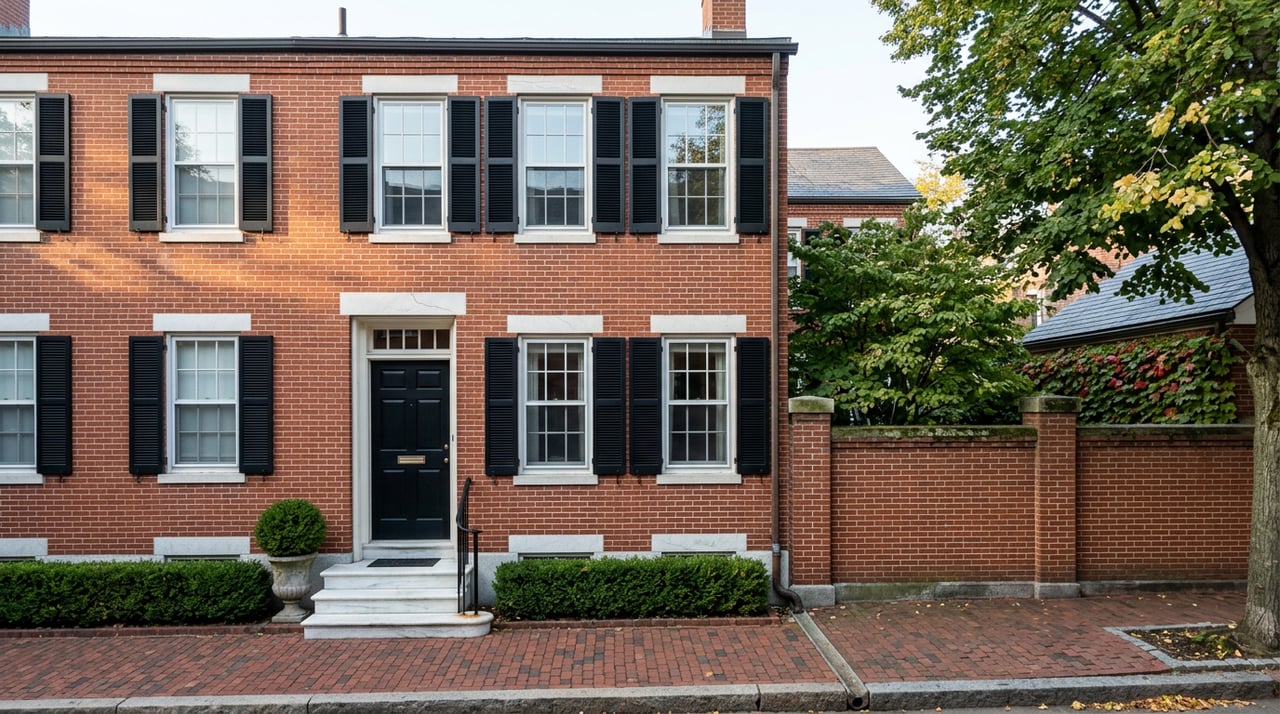
Logan Circle's housing stock runs from Victorian rowhouses and brownstones dating to the late 1800s, many converted into small condo associations with just a handful of units, up through larger amenity buildings and new construction. That range means the reserve question plays out very differently depending on which building you're looking at.
Small associations formed from rowhouse conversions tend to have the thinnest boards, the oldest mechanical systems, and the least professional financial oversight. A four-unit association splitting costs for a roof or a boiler doesn't have the scale that a 100-unit building has, and it's exactly the kind of association most likely to be caught short by the new 15% floor. On the other end, a project like 14 Church, the 65-unit condo building Holladay Corporation is delivering on Church Street NW by the end of 2026, designed by Eric Colbert and Associates, starts with newer systems and a longer runway before major capital needs hit. It sits next to Rainbow Lofts, the former auto body shop converted to condos back in 2004, itself now old enough that its own reserve funding is worth a closer look two decades in.
Established buildings like The Iowa, The Metro, and The Leumass fall somewhere in between: not brand new, but large enough to spread costs across more owners than a four-unit rowhouse conversion ever could. None of this means small associations are poorly run or that new buildings are automatically safe. It means the size and age of the building change what questions are worth asking, and a buyer comparing a rowhouse-conversion unit against a unit in a larger building is comparing two different financial structures, not just two floor plans.
What the Median Price Hides
Early 2026 figures put Logan Circle's median sale price somewhere around $675,000 to $725,000. That number gets repeated often enough that it's easy to treat as the entry price for the neighborhood. It isn't. That median is pulled down hard by the sheer volume of one-bedroom condos changing hands. Fee-simple rowhouses in Logan Circle start closer to $1.6 million and climb from there.
The gap between those two numbers isn't just about square footage. A rowhouse purchase gets underwritten like any single-family home, no association, no shared reserve fund, no warrantability question at all. A condo purchase brings you into a shared financial structure whose health you're only now learning isn't guaranteed by statute. Two buyers with the same budget looking at "Logan Circle real estate" are often looking at fundamentally different transactions, one exposed to the reserve and warrantability questions above, one not.
Region-wide, D.C.'s condo market has been running buyer-friendly through 2026, with more supply relative to demand than the single-family market in the surrounding suburbs. That gives Logan Circle condo buyers real leverage to ask for the full resale package early and walk away from a building whose numbers don't hold up, rather than feeling pressure to compete on a compressed timeline.
Before You Write an Offer
A few habits are worth building into any Logan Circle condo search, especially given everything above.
Ask for the resale package before you're deep into a contract, not after. Read the reserve balance against the age and size of the building, not just against the monthly fee. A low HOA fee paired with a small reserve account is a warning sign, not a bargain. Check whether the building carries FHA approval if that financing matters to you, since approval is granted building by building and not every Logan Circle association has it. Read the last twelve months of board meeting minutes for any mention of planned capital projects, since a project discussed in minutes but not yet reflected in the budget is often the first sign of an assessment to come.
If you're looking at a smaller rowhouse-conversion association, ask directly whether a reserve study has been done in the past three years and whether the board has looked at where it stands against the new federal funding floor taking effect in January 2027. If you're buying a rowhouse outright rather than a condo unit, most of this doesn't apply. You're financing a single-family property, and the Historic Preservation Review Board's authority over street-facing exterior changes becomes the more relevant process to understand, since anything visible from the sidewalk requires its own approval separate from the sale itself.
A Few Questions Before You Sign
Does every Logan Circle condo need FHA approval to sell? No, but if you or a future buyer plans to use FHA or VA financing, the building has to carry that approval specifically. It's granted per building, not neighborhood-wide, so a project down the block having approval tells you nothing about the one you're considering.
What happens if a building's reserves are underfunded when I'm ready to sell? It can narrow your buyer pool to cash purchasers or buyers using portfolio lenders willing to work around a non-warrantable building, since standard conventional financing may not be available until the association's funding improves.
Is a small rowhouse-conversion association automatically riskier than a large building? Not automatically, but smaller associations have less room to absorb a major repair without a special assessment, which makes their reserve funding worth checking closely regardless of how well the building looks.
Buying into Logan Circle means buying into whichever financial structure sits behind the front door, whether that's a four-unit association still funding its first roof replacement or a board already adjusting for a federal rule that hasn't taken effect yet. If you're comparing specific buildings on these blocks and want a second read on what a resale package actually shows, Levin Group Real Estate can help you go through it before you write an offer.