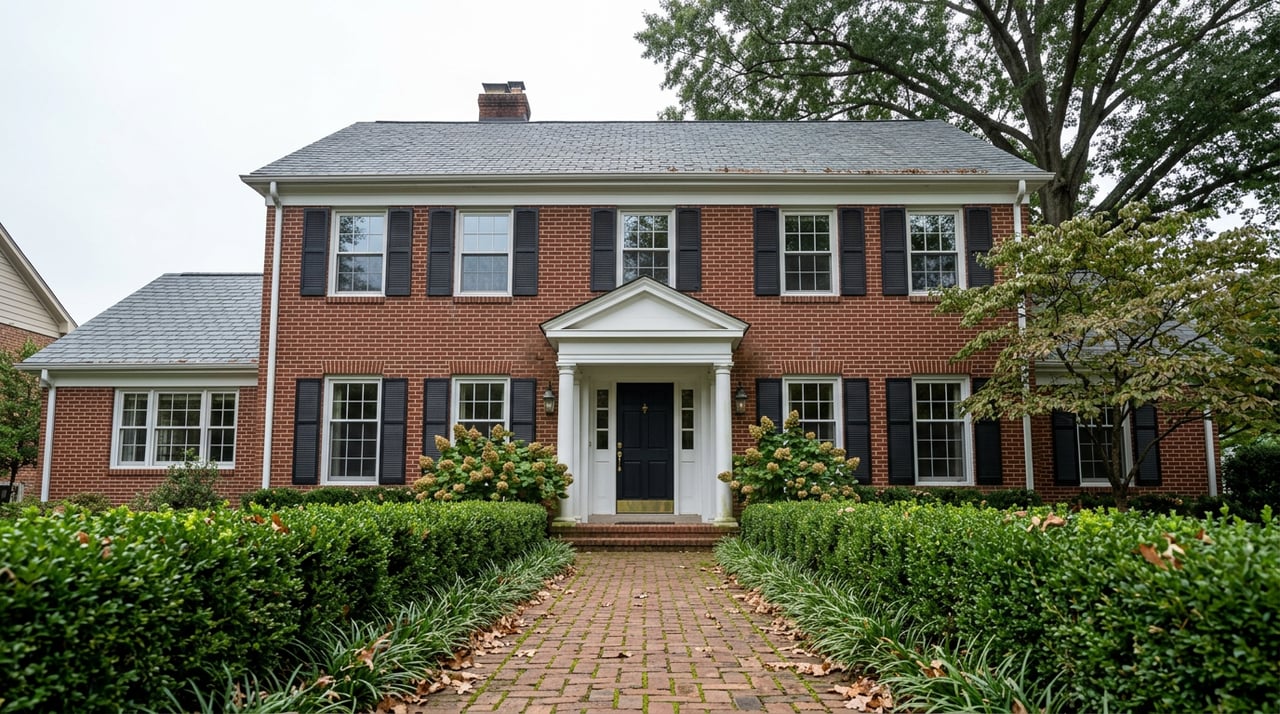
A homeowner spent months getting their renovation through Montgomery County's Historic Preservation Commission. The plan called for demolishing a side wing, a patio, and a gazebo, then rebuilding. The Commission reviewed it against the county's preservation guidelines and conditionally approved it. The Village's tree review was a separate step.
Shortly after the county signed off, the Chevy Chase Village Board of Managers denied the owner's request to remove a 14-inch black gum tree standing in the front yard. The whole plan went back to the drawing board. The owner returned with a redesign that shrank the footprint and kept the tree in place, according to Montgomery County Historic Preservation Commission staff records from earlier this year.
If you're buying, selling, or renovating in Chevy Chase, understanding the county's historic-district review and the Village's separate tree rules can help you plan for the approval process.
The Commission Almost Always Says Yes
Chevy Chase Village's historic district sits under Montgomery County Code Chapter 24A, and the guidelines that govern it lean permissive by design. Most alterations and additions are supposed to be approved as a matter of course. Work on the rear of a house, out of view from the street, gets a lenient review. Even new construction gets latitude if it doesn't damage the character of the surrounding block. Staff reports from this year on Grafton Street, Hesketh Street, and Kirke Street all follow the same pattern: modest revisions to porches, rooflines, and rear additions, approved with a couple of routine conditions attached.
Buyers may be familiar with historic-district review, but the Village has a separate review process as well.
A Separate Village Review
Chevy Chase Village is a municipality, not just a historic overlay. It has its own Board of Managers, its own building department, and its own tree ordinance that runs independently of the county's preservation review. According to Ambition Custom Homes, before the Village will issue a building permit inside the historic district, it wants the county's Historic Area Work Permit in hand first. But getting that county permit doesn't settle anything with the Village itself. If your project touches a tree the Village wants to protect, the Village can still say no, on grounds that have nothing to do with architecture or historic character.
That's what happened with that renovation. The county's preservation staff reviewed massing, materials, and visibility from the sidewalk. The Village's Board of Managers reviewed the tree request. The two reviews addressed different matters, and the Village's decision followed the county's conditional approval.
The Village also asks for a tree preservation plan from its own arborist, with protective fencing installed before construction starts, not after.
Chevy Chase Has Several Local Jurisdictions
The other detail that trips people up is the assumption that "Chevy Chase, MD" is one place with one process. It isn't. Montgomery County's own tax and permitting maps identify Chevy Chase Village, the Town of Chevy Chase, North Chevy Chase, Chevy Chase View, and Friendship Heights as separate local jurisdictions inside the same general area. A house two blocks away can answer to a different government entirely.
| Municipality | What actually triggers extra review | Who decides |
|---|---|---|
| Chevy Chase Village | Any exterior work inside the historic district needs a county HAWP first; tree work needs arborist-approved protection plan | County Historic Preservation Commission, then the Village's own Board of Managers |
| Town of Chevy Chase | Adding roughly 700 square feet or more of impervious surface, a patio, a widened driveway, a large deck, triggers a Water Drainage Application | Town government |
| Chevy Chase View | Front yard driveway aprons and curb cuts need their own town-issued permit | Town government |
North Chevy Chase and Friendship Heights round out the list, two more names attached to the same stretch of the county, each running its own local government rather than deferring entirely to Montgomery County.
Jurisdiction-specific permit requirements may not be apparent from a listing sheet. Filing for a permit in the wrong jurisdiction or the wrong order can, by most accounts, add four to six weeks to a renovation. Because the boundaries are not always obvious from the street, confirming which local government applies before filing can help avoid delays.
What Changes When The Market Slows Down
For a stretch of the past few years, none of this mattered much to a buyer, because homes here were selling in under three weeks and there was no time to dig into permit history before writing an offer. That's shifted. As of mid-2026, homes in the Chevy Chase area were averaging 44 days on the market before going under contract.
That extra time changes what buyers actually look at. When a house is gone in under three weeks, nobody is pulling the Village's permit history or asking whether that new sunroom got a Historic Area Work Permit before it got a contractor's invoice. At 44 days, buyers and their agents have time to ask. Unpermitted additions inside a historic district don't just create cosmetic risk. They can complicate title, financing, and resale, because the next buyer's lender or insurer may ask the same questions you didn't get around to.
If you're selling a house here that's had work done in the last decade, it's worth confirming the paper trail exists before a buyer's inspector finds a rear addition that never went through the Village at all.
If You're Comparing This Side Of Western Avenue
Some buyers cross-shopping Chevy Chase are also looking at the DC side, just across Western Avenue, where a different tax structure applies at the closing table. Maryland layers a state transfer tax, a Montgomery County transfer tax, and a recordation tax that climbs with price under the county's current schedule. DC uses its own bracket system.
Which side of the line ends up carrying more of that cost depends on how the contract allocates it, and Maryland and DC don't share identical customs for who pays what. That's worth confirming in writing with your title company rather than assuming, especially if you're comparing a house in the Village to one a few blocks away in DC.
A Few Questions Worth Asking Before You Write An Offer
Does this specific address sit in the Village, the Town, or one of the neighboring municipalities? The boundary lines aren't always obvious from the street. Confirm it before you budget for renovation timelines, since the permitting sequence and approving bodies differ by jurisdiction.
If the house is in the historic district, has any exterior work been done recently, and did it get a Historic Area Work Permit?
Are there mature trees on the lot that a future project might need to remove? In the Village, that question can matter as much as anything the historic commission reviews. A tree the Board of Managers wants to protect can outweigh a design the county has already approved.
Chevy Chase includes several local jurisdictions, each with its own approval processes, and a property may involve both historic-district and tree review. If you're weighing a purchase, a renovation, or a sale anywhere in this stretch of Montgomery County, Levin Group can walk through which government governs your address and help you understand which approvals to consider before planning a project. Get in touch for a personalized consultation.
This article is general information, not legal, tax or financial advice. Consult a qualified professional about your situation.