For roughly three months this spring, the green space at the center of Logan Circle disappeared behind chain-link fencing. If you live on Rhode Island Avenue, 13th Street, or any of the blocks that ring the circle, you know exactly which three months. The park closed on March 30 with an original target reopening of June 15, but that date slipped, and crews were still unloading new benches as late as June 25, which meant most of a spring without the patch of grass most residents use more than any other public space in the neighborhood.
Now the fencing is down, the new benches are bolted in, and the statue at the center gleams a little brighter than it did in February. The obvious story is that the park got fixed up and everyone can go back to normal. That story is true as far as it goes, but it skips the more interesting part: the renovation restored the park as a monument. It did almost nothing to address the park as it is actually used, which is as a dog run, a bocce court, and the closest thing to a backyard that a lot of rowhouse and condo residents have.
What Closed, and Why
The National Park Service framed the project as part of the federal "DC Safe and Beautiful" initiative, and the scope was squarely about physical restoration. According to the agency's own description of the work, crews spent the closure replacing the exposed aggregate concrete walkways, restoring turf and landscaping, installing new irrigation, repairing and upgrading lighting, replacing trash receptacles, repairing benches, and doing tree and arborist work to protect the park's canopy. The centerpiece of the project was the restoration of the Major General John A. Logan Memorial, the equestrian statue that gives the circle its name and sits at its center.
None of that is small. Anyone who walked past the circle last winter knows the walkways had buckled in places and the turf around the statue had worn down to dirt. But it is worth noticing what kind of project this was from the start. It was a restoration project, aimed at bringing worn infrastructure back to its original condition. It was never framed as a redesign aimed at how people actually spend time there.
What You'll Actually Notice
Walk the circle now and the changes are real, if modest. The new walkways replace the old cracked concrete with a smoother surface. The turf around the statue, which had been reduced to bare dirt by years of dogs and picnic blankets, has been reseeded and is filling back in. New irrigation lines mean that grass has a better shot at surviving next summer than it did the last few. The lighting has been upgraded, which matters more than it sounds like it should for anyone walking home after dark. New iron fencing now rings the inner circle itself, and the statue has been cleaned and stabilized.
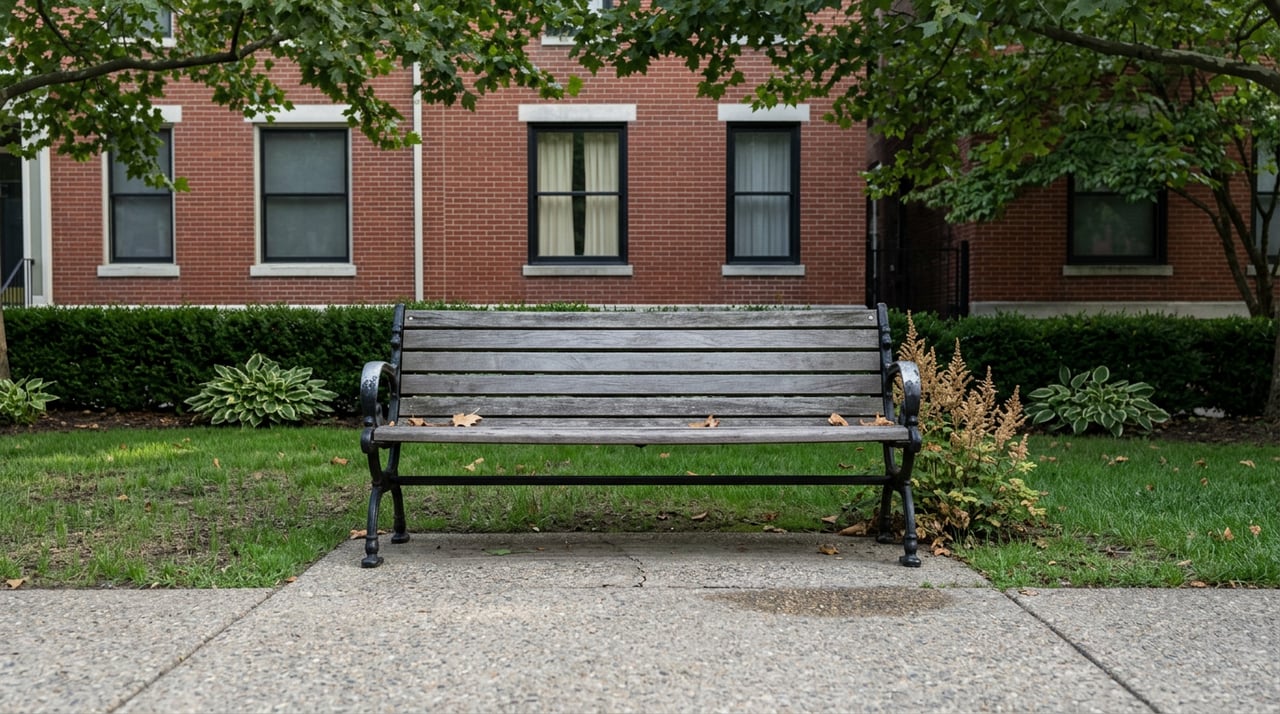
The benches took the longest to sort out. When the closure began in March, NPS trucked the old benches away before replacements had arrived, which left the park without seating even before the fencing went up. New benches were still being unloaded and installed as late as June 25, well past the original mid-June target, before the park finally reopened.
The Part the Renovation Didn't Touch
Here is where the story gets more useful than a simple before-and-after. Logan Circle is not treated by the National Park Service as an ordinary monument, and it functions nothing like one. It is, as the National Park Service's own page on the site notes, the only circle park in Washington that retained the residential character Pierre L'Enfant originally intended for the city's circles, meant as a gathering space surrounded by homes rather than a formal civic set piece. In practice, that means the grass around General Logan's statue functions as an unofficial dog park most mornings and evenings, and the flat gravel apron on one side hosts games for the Stonewall Bocce league.
None of that use pattern shaped the renovation brief. A piece published on Greater Greater Washington while the park was still fenced off pointed out that the project's plan focused entirely on restoration and upkeep: refinishing the statue, replacing walkways, restoring turf, repairing benches, pruning trees. Worthwhile work, but none of it addresses the fact that people use this park as a meeting place, a picnic spot, and a dog run in a dense neighborhood with limited alternatives.
The same piece raised something residents have watched happen more than once. Cars have driven into the park itself in 2012, 2018, 2023, 2024, and 2025, according to that reporting, damaging fences, benches, trees, and turf each time. So far the damage has been limited to the park's furnishings rather than the people using it, but that is closer to luck than design. The renovation added new fencing around the inner circle, which offers some protection, but it did not include bollards or other physical barriers specifically engineered to stop a vehicle. The infrastructure that got fixed this spring is largely the same infrastructure that has been driven into five times in thirteen years.
There's a second thing the renovation skipped entirely: neighbor input. According to that same coverage, residents received only a few days' notice before the closure began, with no real chance to weigh in on priorities or review the plan before the fencing went up around a park many of them use daily. For a green space that functions as a shared backyard for the rowhouses and condos ringing it, that is a different kind of gap than a missing bollard, but it is the same underlying pattern. The people who use the circle most were not the ones the plan was built around.
What This Means If You Live Here
None of this makes the renovation a bad thing. Fresh turf, working irrigation, better lighting, and a stabilized statue all count as real improvements, and anyone who spent last winter picking their way around cracked walkways will notice the difference immediately. The point is narrower than that. If you use the circle as your dog's daily loop, your Sunday picnic spot, or your bocce league's home court, the thing that just got fixed was the monument, not the neighborhood amenity built on top of it. The turf will hold up better this time. The next car that jumps the curb will still find the same lack of protection that let the last five through.
That distinction matters if you're the kind of resident who shows up at ANC meetings or writes to your council member about how public space gets planned. It also matters in a smaller, more immediate way: if you're picking a spot for a Saturday morning with the dog or scouting a location for a bocce match, the circle is back and it looks better than it has in years. Just know what you're standing on. The statue got its restoration. The dog park and the bocce court got a byproduct of someone else's project.
If you're weighing what a stretch of the neighborhood like this means for your own next move, whether that's a rowhouse a block off the circle or a condo closer to 14th Street, that's a conversation worth having with someone who knows these blocks well. Levin Group has spent years walking clients through the tradeoffs between Logan Circle's historic district streets and its commercial corridor, and we're happy to talk through what a specific block, or a specific renovation like this one, actually means for you. Get in touch for a personalized consultation whenever you're ready.