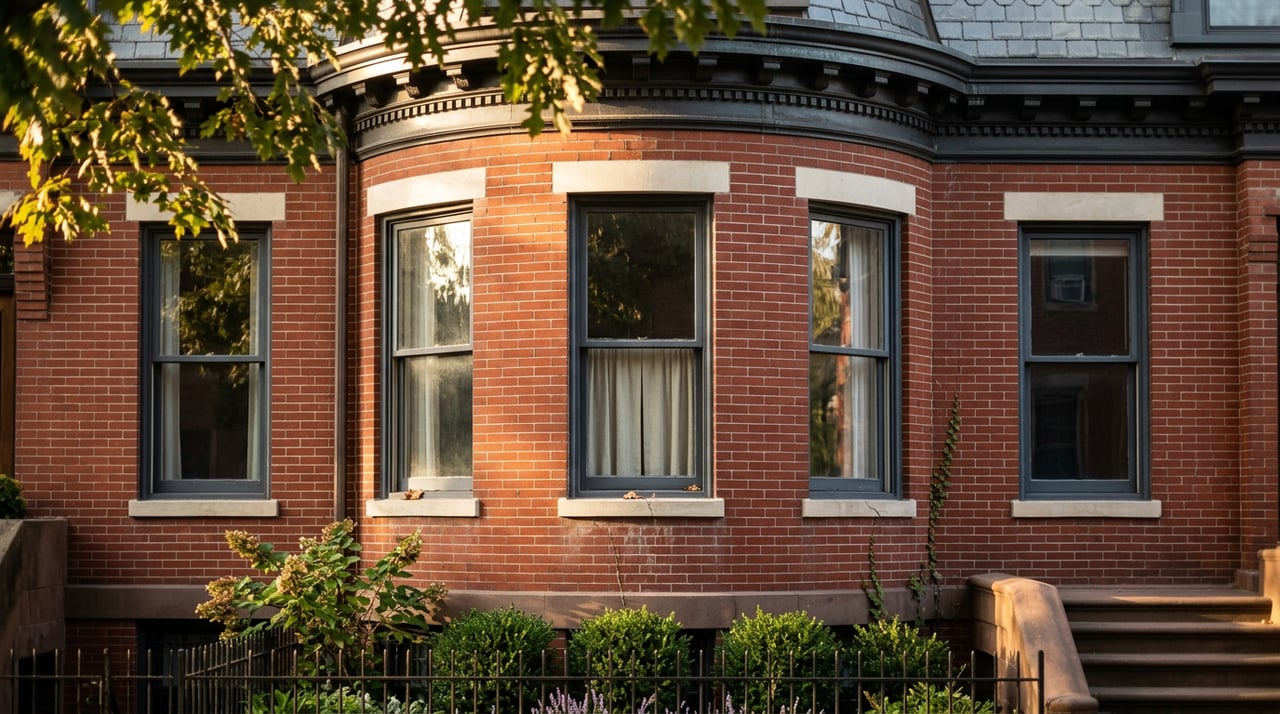
Most DC neighborhoods do one thing well. Mount Pleasant Street does three, and it does them on the same 3100 block, in the same twelve hours. The plaza that pours coffee at nine is pouring margaritas by nine at night, and the same neighbors keep showing up in different rooms. If you already live here, you know the loop. What you may not have clocked is how tightly the village's Saturday is choreographed around a single spine of about four blocks, and how much of it runs year-round rather than seasonally.
That compactness is the argument for the day. You do not drive. You do not plan. You walk out with a tote and let the corridor hand you the next thing.
9 a.m. — The Plaza Does the Heavy Lifting
Start at Lamont Park. The Mount Pleasant Farmers' Market runs every Saturday from 9 a.m. to 1 p.m. on the plaza at 17th and Lamont, with producers all located in the Chesapeake Bay Watershed within 125 miles of Washington, and it runs year-round. Winter shifts to a 10 a.m. start from January through March, so the schedule contracts by an hour when it is cold and expands back in April.
Two things make this market distinct from Dupont's or Penn Quarter's, and neither of them is the produce.
First, it is a producer-only market, which means the fruit, vegetables, meat, dairy, bread, cakes, flowers, and prepared foods all come from the farmers who grew or made them, with some certified organic or chemical-free and the meat and dairy free-range. That is a policy choice, not a marketing line, and it is why the vendor list is short and the same faces show up week after week.
Second, the plaza is not just a market. On the same footprint, the Mount Pleasant Community Compost volunteers collect vegetable compost, the Mount Pleasant Bike Clinic helps get bicycles into safe riding condition, and the Friends of the Mount Pleasant Library runs a weekly book sale next to the Plaza. So the Saturday errand stack is: drop compost, tune the bike, buy the eggs, grab a used novel. In four blocks. Before lunch.
A quiet detail worth knowing if food access matters to you: the Mount Pleasant Farmers Market is a FreshMatch site, which doubles SNAP dollars spent at the market and keeps the customer base broader than the price tags on the tents might suggest.
10:30 a.m. — The Corridor Wakes Up
Turn out of the plaza and you are on Mount Pleasant Street, which is not an accident of geography. It is a designated Great Streets corridor, where small businesses may apply for grants for capital improvements and certain soft costs, with $2.55 million available in fiscal year 2024 and individual awards up to $85,000. That funding is why the storefronts look the way they do, and why the turnover here is slower than in most DC commercial strips.
The corridor's food density is genuinely unusual. Two Bib Gourmand kitchens sit within a five-minute walk of each other, along with a bakery-café that pulled national attention out of the gate.
| Spot | Address | What it is |
|---|---|---|
| Ellē | 3221 Mt Pleasant St NW | Bib Gourmand café, bakery and restaurant in the old Heller's space |
| La Tejana | Mt Pleasant St NW | Bib Gourmand, Texan/Mexican |
| Purple Patch | 3155 Mt Pleasant St NW | Filipino, on Resy's DC Hit List as of Feb 2026 |
| Martha Dear | Mt Pleasant St NW | Neighborhood pizzeria, Greek-owned |
| Mount Desert Island Ice Cream | 3110 Mt Pleasant St NW | Rotating scoops including sakura and salmiakki |
| Beau Thai | 3162 Mt Pleasant St | Thai, longtime local |
| Joia Burger | Mt Pleasant St NW | Filipino-owned burger counter |
The Ellē building carries the neighborhood's memory in a way most DC storefronts do not. Heller's Bakery, opened in 1928 by German immigrant Ludwig Heller, at one point employed 50 people with delivery trucks and nearly half a dozen stands around the city, until it closed in 2014 after high rent and a decrease in sales. When Ellē moved in, the design of the space imagined what the bakery would have looked like when it first opened in the 1920s, and the team resurrected Heller's 25-year-old rotating convection oven. The name is a nod to Heller and to the founder's grandmother Ellie. If you have wondered why the blue-and-white sign still hangs, that is why.
Purple Patch has been the neighborhood's Filipino anchor for over a decade. Chef and owner Patrice Cleary has run the Patch for more than a decade, fusing traditional Filipino dishes with modern touches, including pancakes and waffles injected with ube's purple color. Its Feb 2026 return to the Resy Hit List is a small thing that matters, because it means the room a lot of us treat as a default weeknight spot is, right now, one of the restaurants the city sends visiting friends to.
1 p.m. — Why the Block Feels Different Than Adams Morgan or Columbia Heights
This is the part outsiders miss. The corridor is not curated. It reflects who has actually run businesses here.
Mount Pleasant is one of DC's most eclectic neighborhoods, and longstanding retailers along Mount Pleasant Street reflect its international flair, with an Eritrean-owned Argyle Market, Guatemalan Corados, Salvadoran-Mexican Don Juan, Korean-owned El Primo, Salvadoran-owned Frugalista, Salvadoran-owned Golden Scissors, Salvadoran Haydee's, Filipino-owned Joia Burger, Korean-owned Lamont Cleaners, Ethiopian-owned Raven Grill, and Indian-owned Sportsman's Liquor. That is a commercial ecology, not a rebrand. It is also why Time Out's global editors named Mount Pleasant one of the 38 Coolest Neighborhoods in the World in 2024.
A short recommendation if you have been here a while and default to the same three spots: rotate one in from that list every Saturday for a month. Haydee's for pupusas, Corado's for Guatemalan, Argyle for Eritrean groceries, Frugalista for secondhand. The corridor rewards the second visit more than the first.
3 p.m. — The Bookshop Detour
Between lunch and cocktails, there is a specific stop that has changed how afternoons run on the block. Bold Fork is DC's only culinary bookshop, and the founders, both restaurant-industry vets, have curated cookbooks, novels, magazines, guidebooks, kitchenware, DC-specific publications and specialty items, plus an events calendar with author events and book clubs. A cookbook launch here on a Saturday afternoon regularly pulls in chefs from the corridor, which turns a book signing into something closer to a neighborhood open house.
If you have kids in the loop or you are tired of the sun, the pattern is well established: farmers' market, lunch at Ellē or La Tejana, ice cream at Mount Desert Island, twenty minutes at Bold Fork, home. Licorice, basil, butterscotch miso, eggnog and Thai chili are among the flavors that turn up in rotation at Mount Desert Island, which is worth mentioning because the flavor board is genuinely different each week and is the reason kids drag parents back.
6 p.m. — The Corridor Turns Over
By early evening, the same block is a different neighborhood. The bakery becomes a full-service restaurant. Purple Patch fills up. Don Juan gets loud.
The dive that anchors the after-hours end of the corridor has been here longer than almost anything else. In business in one way or another since 1935, Raven Grill does not serve food anymore, but the narrow, retro watering hole doles out PBR beers, simple mixed drinks and a quirky jukebox, with walls covered in graffiti and photos of classic rockers. It is the only place on the block that has been in continuous operation longer than most of the current residents have been alive.
For a full evening, Don Juan runs the other way. The Christmas lights are always on, the menu is Mexican-Salvadoran with strong margaritas, and karaoke nights fuel good times until the wee hours. Pair it with a pupusa platter and you have the standard Mount Pleasant Saturday night.
What Runs Beyond the Weekly Rhythm
Two neighborhood-scale events reshape a Mount Pleasant Saturday when they land on the calendar.
The first is Art All Night Mount Pleasant, one arm of the citywide festival. It is funded by the Department of Small and Local Business Development and the DC Commission on the Arts and Humanities, and it turns the corridor into a late-night gallery for one weekend a year. Watch the District Bridges events calendar for the 2026 date.
The second is the year-round Main Street work that most residents never see the seams of. In 2016, District Bridges was awarded its first DC Main Street grant to serve the commercial corridors of Columbia Heights and Mount Pleasant, in a designation that was unique because it was assigned to serve two distinct neighborhoods each facing separate challenges. That structure is why the Great Streets money above actually reaches storefronts, and why the plaza has a programming budget instead of just a schedule.
The Case for Staying Local
If you have lived here two years or twenty, the argument of this post is not that Mount Pleasant has hidden gems. It does not. Everything on this page is on the same four blocks and has been reviewed to death. The argument is that the neighborhood works best when you treat it as a single Saturday loop rather than a set of destinations. The plaza is the pivot. The corridor is the spine. Raven Grill closes the loop.
That is the reason a lot of us stopped driving into Adams Morgan on the weekends. You do not have to leave to have a full day.
If your Saturday routine has you thinking harder about the home that anchors it, Levin Group Real Estate has watched the corridor from Bethesda to Mount Pleasant for decades, and we would be glad to talk when the time is right. Get in touch for a personalized consultation.